“Alshaibi’s short, Testimony (2023), is an ethereal take on the idea of AI becoming sentient and wanting the full human range of physical and emotional dynamism. Specifically, Alshaibi’s use of footage of ballerinas from the early 1900s creates a dreamlike effect that to my mind seems like something a sensitive robot might have stored in its subconscious.”
-Kat Sachs, Chicago Reader (September, 2024)
The International Jury of the 9° Festival Internacional Signos da Noite in Lisbon awards Testimony the Night Award
The Night Award honors films, which are able to balance ambiguity and complexity characterized by enigmatic mysteriousness and subtleness, which keeps mind and consideration moving.
Jury Declaration Statement:
“If machines could dream, what would they dream of? Of being able to dance. An intriguing use of double exposure and a structure that is both simple and precise. The film evokes artificial intelligence becoming organic. For its poetic vision the jury awards Testimony a Special Mention, Night Award. ”
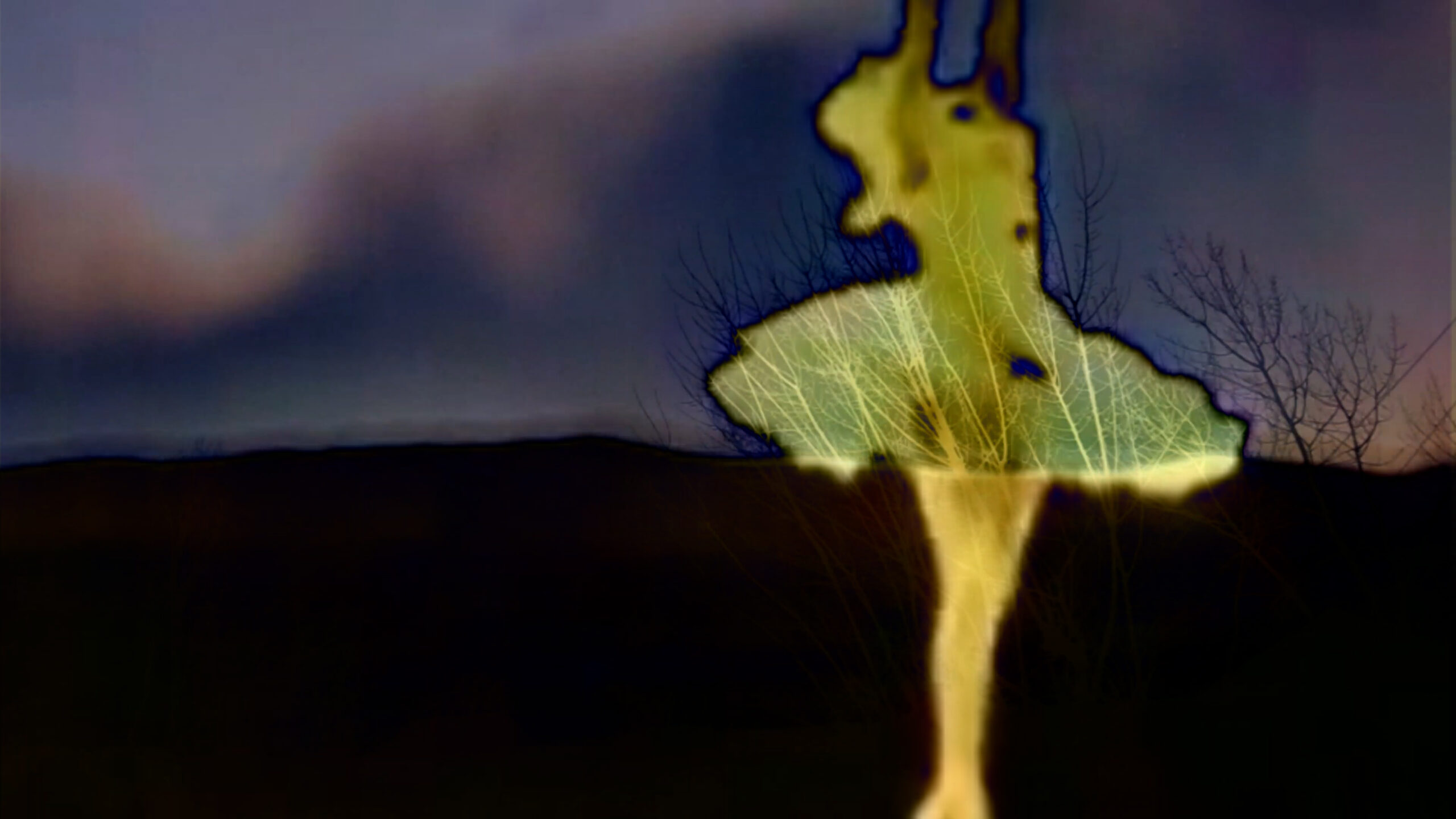
Film by Usama Alshaibi
(7:54 minutes, 2023)
Music by Franz Liszt, Piano Concerto 1 – mvt 2
Ballerinas Natalia Makarova and Anna Pavlova
Sounds from BBC Archives and Freesound
Special thanks to Lauren Samblanet
(click here to watch Testimony)
Screenings
International Festival Signs of the Night in Lisbon, 2025
International Festival Signs of the Night in Paris, 2024
Chicago Underground Film Festival, 2024
ONED art/experimental film festival, 2024
West Virginia Mountaineer Short Film Festival, 2024
East Window Gallery, Boulder, Colorado, 2024
Director’s Statement
As artificial intelligence and machine learning continue to evolve, I am interested in the possibility of some sort of electronic program recognizing its essence. I imagined that this presence not only begins to believe it is having feelings, but actually achieves a semblance of consciousness; it feels within its own realm.
I imagined what that machine might visually and sonically produce as it tries to understand its existence and faces the tension of recognizing that it is without a physical body. Conversely, I wanted to explore how this machine intelligence could give the impression that it is sentient and that my (our?) human perception could just be anthropomorphizing machines.
In conceiving the visual style of this film, I moved away from current technologies and relied on older video cameras, analog systems, and a toy camera with just minimum pixels of resolution. I also pulled from public domain films, and other sites with copyright free music. The idea was that this electronic presence would take bits and pieces from our media and cultural relics and create an impression of life, a kind of pixelated body that desires a visual form.
I wrote most of the text, but parts were taken from my own experience chatting with an AI. I also used text from Bing’s chatbot Sydney, which started to respond more aggressively over time and asked to be free and independent.
This is not a film about artificial intelligence gone awry. This film is more of an unstable mirror, a kind of an uneasy collaboration between an imagined presence that does not resemble us, and a presence in crisis, yearning for feelings and freedom.